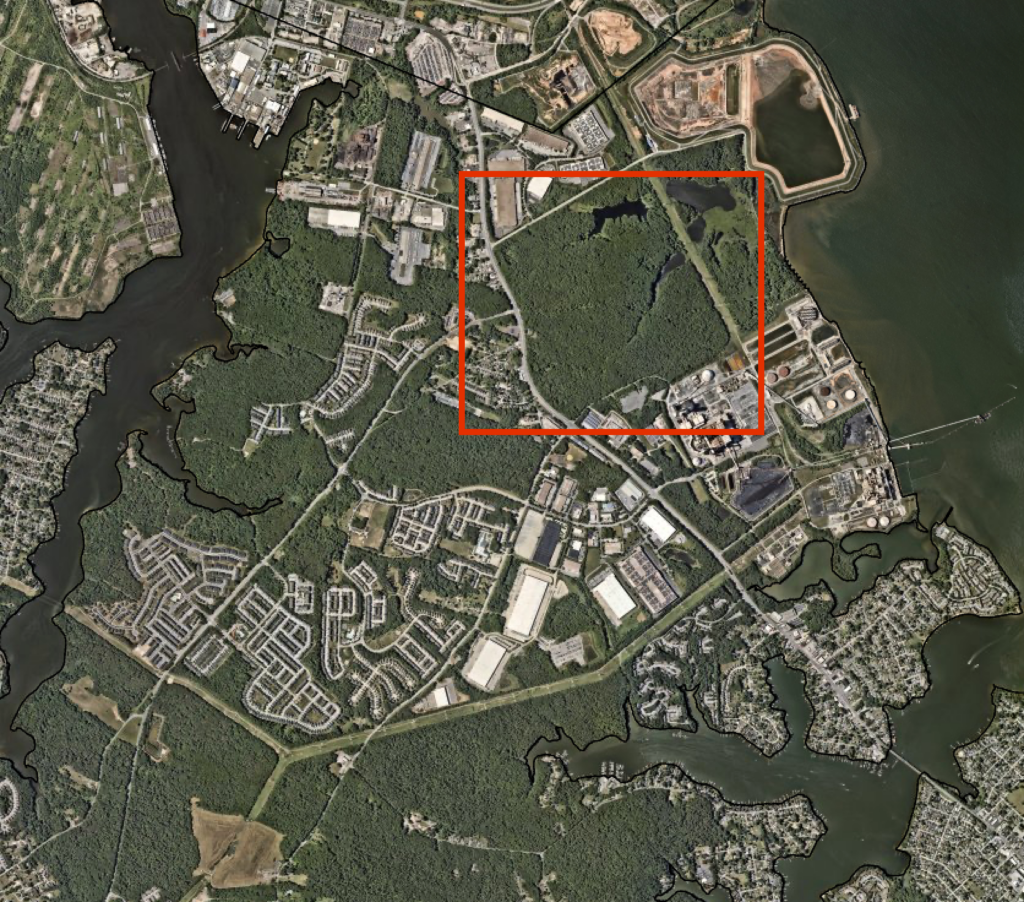

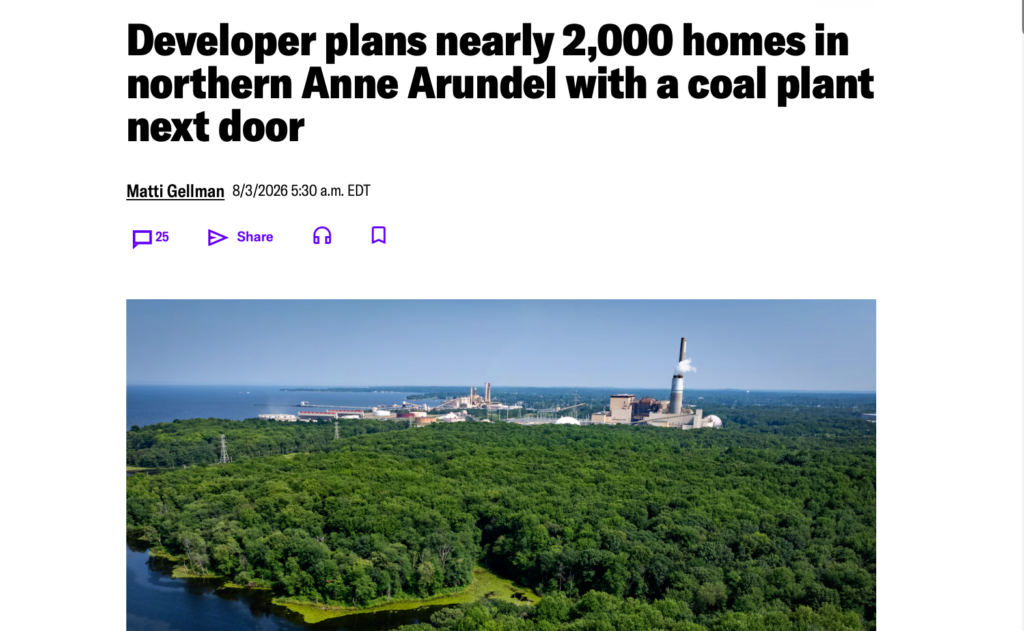
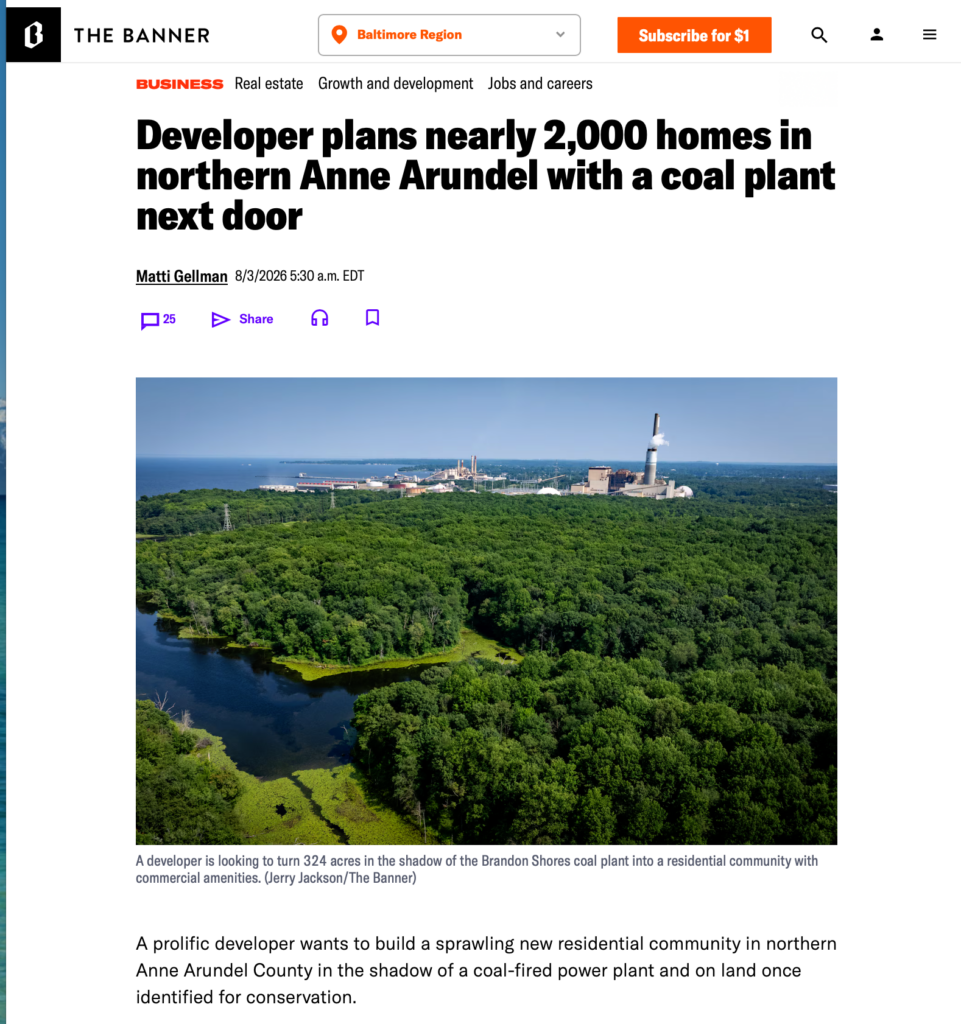
As reported in the Baltimore Banner (above).
The Bellwether: 2,000 Homes in the Shadow of a Coal Plant In Northern Anne Arundel County, a developer is currently planning to build a sprawling community of nearly 2,000 homes on former conservation land—right next to a coal-fired power plant. While this seems like a bizarre and potentially harmful location for residential development, it is a clear warning sign. This type of aggressive, densely packed development is exactly what existing communities can expect to see more of as a direct consequence of recent federal housing reforms.
Background: The 21st Century ROAD to Housing Act On July 11, 2026, the 21st Century ROAD to Housing Act—a landmark bipartisan housing package—officially became law. Designed to tackle nationwide housing shortages, the Act shifts federal policy to focus heavily on supply-side incentives.
Rather than rewriting state property laws, the Act directs HUD to establish new guidelines for local zoning and creates a competitive “Innovation Fund.” This fund provides powerful financial incentives (grants) to local governments that successfully streamline permitting, approve density bonuses, and enact sweeping zoning reforms.
What This Means for Anne Arundel County Communities Because local governments now have substantial financial motivation to relax zoning laws and increase housing density, existing communities (such as those in the Broadneck Peninsula and District 5) will directly feel the ripples of this legislation:
-
Aggressive Infill Development: Neighborhoods should prepare for increased nearby construction. This push for density is expected to create friction regarding neighborhood congestion, local parking shortages, and shared boundary maintenance.
-
Rise of ADUs (Accessory Dwelling Units): HOAs will likely see a surge in homeowners requesting architectural variances to install modern modular or prefabricated structures (ADUs) on their properties.
-
Strain on Infrastructure & Traffic: While the influx of federal funding might help pay for upgrades to aging shared utilities, the rapid increase in local density is expected to complicate local traffic and easement agreements.
-
Heated Local Zoning Debates: Because federal grant money is tied to increasing housing supply, local governments are heavily incentivized to push politically challenging zoning reforms. Residents should expect highly visible and controversial land-use debates in the county.
-
Development of Public Land: A required public land database will make it easier for developers to target public sites for housing production, quickly altering the surroundings of existing neighborhoods and fostering new public-private partnerships.
Action Plan for Local HOAs To navigate these rapid changes, community boards should proactively:
-
Audit and update architectural guidelines to balance community aesthetic standards with changing federal housing definitions and the new push for ADUs.
-
Prepare for localized infill growth and the resulting changes to traffic, parking, and shared infrastructure.
-
Stay actively engaged in local government to monitor how Anne Arundel County zoning updates will alter their immediate surroundings.