

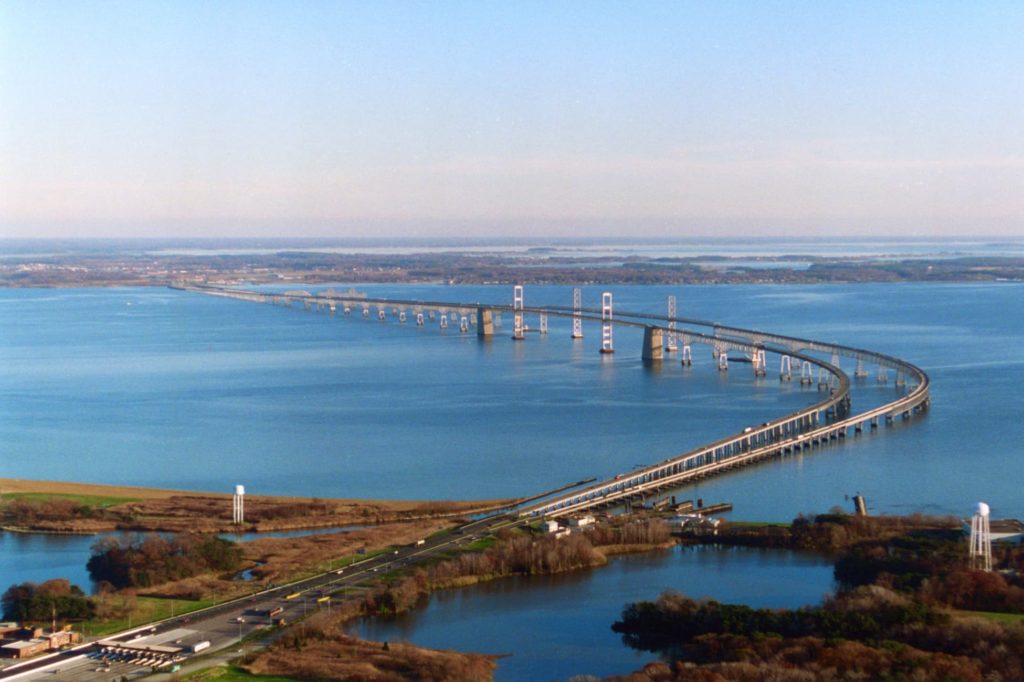
Here is an overview of the Chesapeake Bay Crossing; Tier 2 National Environmental Policy Act (NEPA), Draft Environmental Impact Statement (EIS) held by the Maryland Transportation Authority at Broadneck High School on February 10th, 2026.
The Recommended Preferred Alternative is for Alternative C, the least disruptive design with the construction of the future bridges to be located to the south of their existing bridges.
The Pros:
- Only the potential for disruption to existing adjoining properties.
- The property expected to be acquired are currently commercial properties only.
- Most of the expected disruptions would be in the expanded area near the bridges, within a half mile (1/2 mile) for transition from the current three (3) lanes to four (4) lanes on the bridge.
- The areas beyond that are improved shoulder areas. One residential location on Kent Island on east Rt.50 is planned to be protected by a Sound Barrier to be installed.
The Cons:
- The widening of the bridge to 4 lanes in each direction should eliminate the backups at the bridge once completed, but increased traffic over the next 10-20 years means these backups will increase the impact on nearby access roads and community roads until completion in the Rt 2/Rt. 450/ Severn River Bridge to the Kent Narrows US 301/US 50 split on the eastern shore.
The current cost of the project is estimated at $14-15 Billion dollars there will be phased construction, so there will always be two bridges in service during construction.
The Expected Project Timeline: At best, construction might start in 2032 with completion expected to take 10 years.
The Unknown: Will there be a Shared Use Path? A pedestrian / bicycle path on the north side of the north bridge to allow for easiest access to Sandy Point/ Broadneck Trail and Terrapin Park/ Cross Island Trail on either side of the Chesapeake Bay.
- This is where your voice may matter.
- This represents a once in a lifetime opportunity to change the direction of a completely car centric-ness in our corner of the world.
- The downside is the current estimated cost of $1.2 billion for the add-on. You can look at this as a “bridge too far” or an investment in our future, for example $1.20 billion, over a 100-year expected lifespan just million/year).
- Most comments during the hearing were in favor of the Shared Use Path.
To find more information, follow the link: https://www.baycrossingstudy.com/
- For the information presented during the hearing, visuals, exhibits, areas impacted: https://visualmedia.jacobs.com/BayCrossing-DEIS-Public-Hearings-VIR/
- You have until March 9th to submit comments online here: https://www.baycrossingstudy.com/public-engagement/submit-comments/
